Spreadsheets vs Wintertrace →
Excel and Google Sheets cover a lot — until they hit GPS, weather, and audit-trail requirements. Where the line is, and where it isn't.
Automation and audit trail are the real differentiators.
Comparison
Most operators document winter service somehow — a spreadsheet, a notebook, a cloud platform, a full industry suite. These pages compare Wintertrace against all of it, sober and without a sales pitch.
Two kinds of comparison, because there are two kinds of question. Four category pages argue the general case — paper, spreadsheets, cloud SaaS, proprietary industry software. Six named-product pages take a specific competitor's own published figures, with a source on each row and the date those figures were true.
The category comparisons. The axes used are the ones that actually differ: data ownership, cost shape, evidence quality, automation, and audit trail.
Excel and Google Sheets cover a lot — until they hit GPS, weather, and audit-trail requirements. Where the line is, and where it isn't.
Automation and audit trail are the real differentiators.
Paper has worked for decades. A sober look at what is and is not lost when documentation moves digital.
Search, durability, and per-customer aggregation.
Many cloud platforms for winter service look similar to Wintertrace on the surface. The real comparison is about data ownership, cost shape, and what happens when a vendor disappears.
Same job, very different long-term economics.
Mature industry software bundles dispatch, routing, billing, and documentation behind a per-vehicle subscription and a multi-year contract. Wintertrace narrows the scope and changes the deal.
No per-vehicle pricing, no proprietary hardware, no contract.
Fair, source-backed comparisons with specific winter-service products. Each one names where the other product is stronger, cites where every figure comes from, and says when it was checked. Based on publicly available information; we have not tested them ourselves.
A neutral, sourced comparison between Aspire Software's landscape and snow-business management platform and Wintertrace, an open-source, self-hosted alternative for winter-service documentation.
A neutral, sourced comparison between Aurora Suite's mobile-first snow-removal platform and Wintertrace, an open-source, self-hosted alternative for winter-service documentation.
A neutral, sourced comparison between Jobber's general-purpose field-service management platform and Wintertrace, an open-source, self-hosted alternative focused on winter-service documentation.
A neutral, sourced comparison between LMN by Granum's landscaping and snow & ice business-management platform and Wintertrace, an open-source, self-hosted alternative for winter-service documentation.
A neutral, sourced comparison between Nektyd's field-service documentation platform and Wintertrace, an open-source, self-hosted alternative for winter-service documentation.
A neutral, sourced comparison between Yeti Software's snow-management platform and Wintertrace, an open-source, self-hosted alternative for winter-service documentation.
Two qualitative views — cumulative cost over three years, and time from decision to first documented operation. Categories rather than precise figures: the numbers depend on team size and hosting choices.
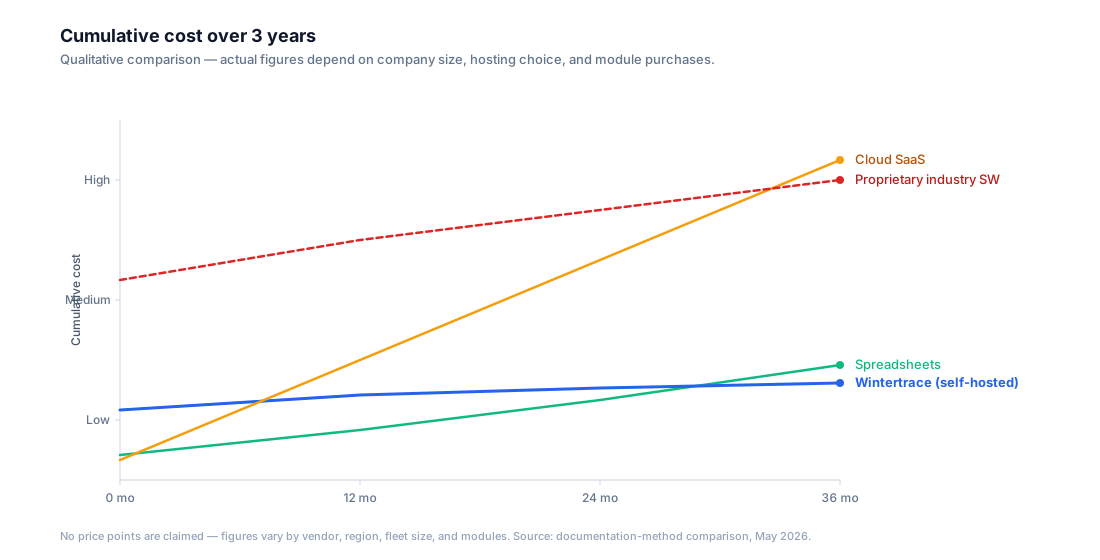
Over three years, a spreadsheet and a self-hosted Wintertrace install both stay near-flat: the cost is your own time plus ordinary hosting. A cloud subscription climbs steadily with every month and every seat, and proprietary industry software starts high and keeps climbing. No figures are claimed — the shape is the point, not the numbers.
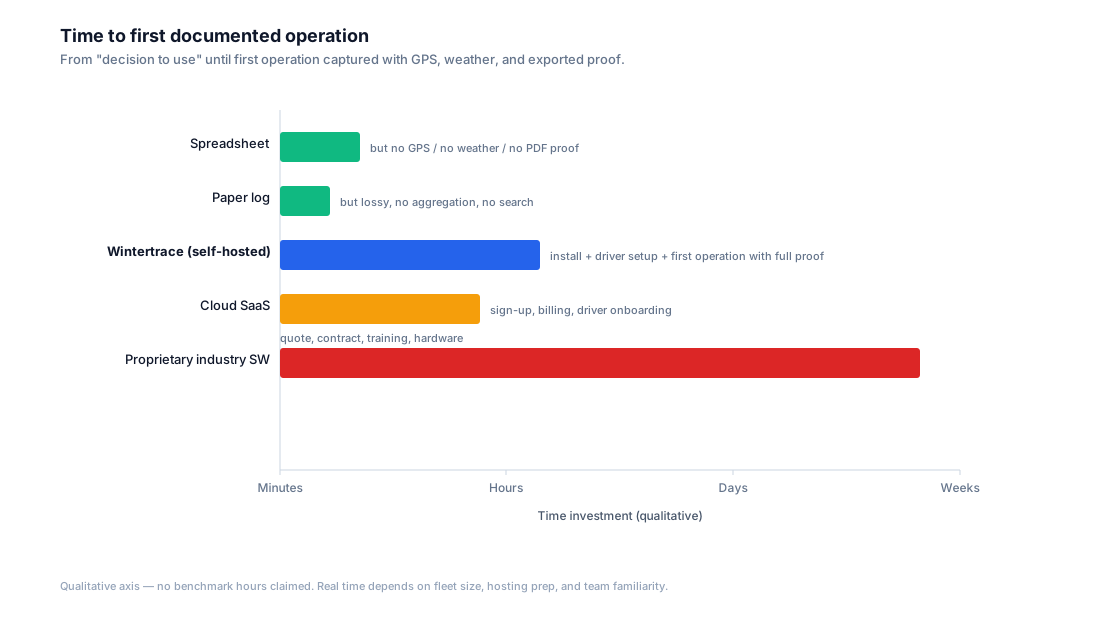
Measured from deciding to use something until the first operation is documented with GPS, weather and an exported proof: paper and a spreadsheet take minutes — but produce none of that evidence. Wintertrace and a cloud platform both take hours. Proprietary industry software takes weeks, because a quote, a contract, training and hardware come first.
A comparison is only useful if it is honest about where it sits. These pages are written by the project maintainer. They will not pretend Wintertrace wins on every axis — a spreadsheet beats a self-hosted application on time-to-first-row, paper beats every digital tool on resilience to a flat battery, and a cloud SaaS with a mature onboarding team beats a self-installed application on the first day of use.
What Wintertrace claims to beat the alternatives on is the medium-term: durable evidence, automation of weather and GPS, audit-trailed documentation, and freedom from a vendor relationship. Those are the claims the comparisons examine.
On the named-product pages, every figure about the other product comes from that company's own published material, with a deeplink on the row and the date it was checked. The Wintertrace column is written once and reused on every page, so it cannot be tuned to flatter a particular competitor. If something is out of date, the operator of that product can tell us and we will correct it.
Note: The comparisons describe operational and architectural differences. They do not make legal claims. Wintertrace provides documentation support and is not a substitute for legal advice.
Wintertrace is free and open source. You can install it on hosting you already pay for, or try a temporary instance first.
Wintertrace is early and shaped by real winter service work. Share your feedback →