Winter service · Manitoba
Winter service in Winnipeg
What winter is really like in Winnipeg: 126 cm of snow, snow on the ground for four months, the City's snow-zone parking bans, windrows, fines and who clears what.
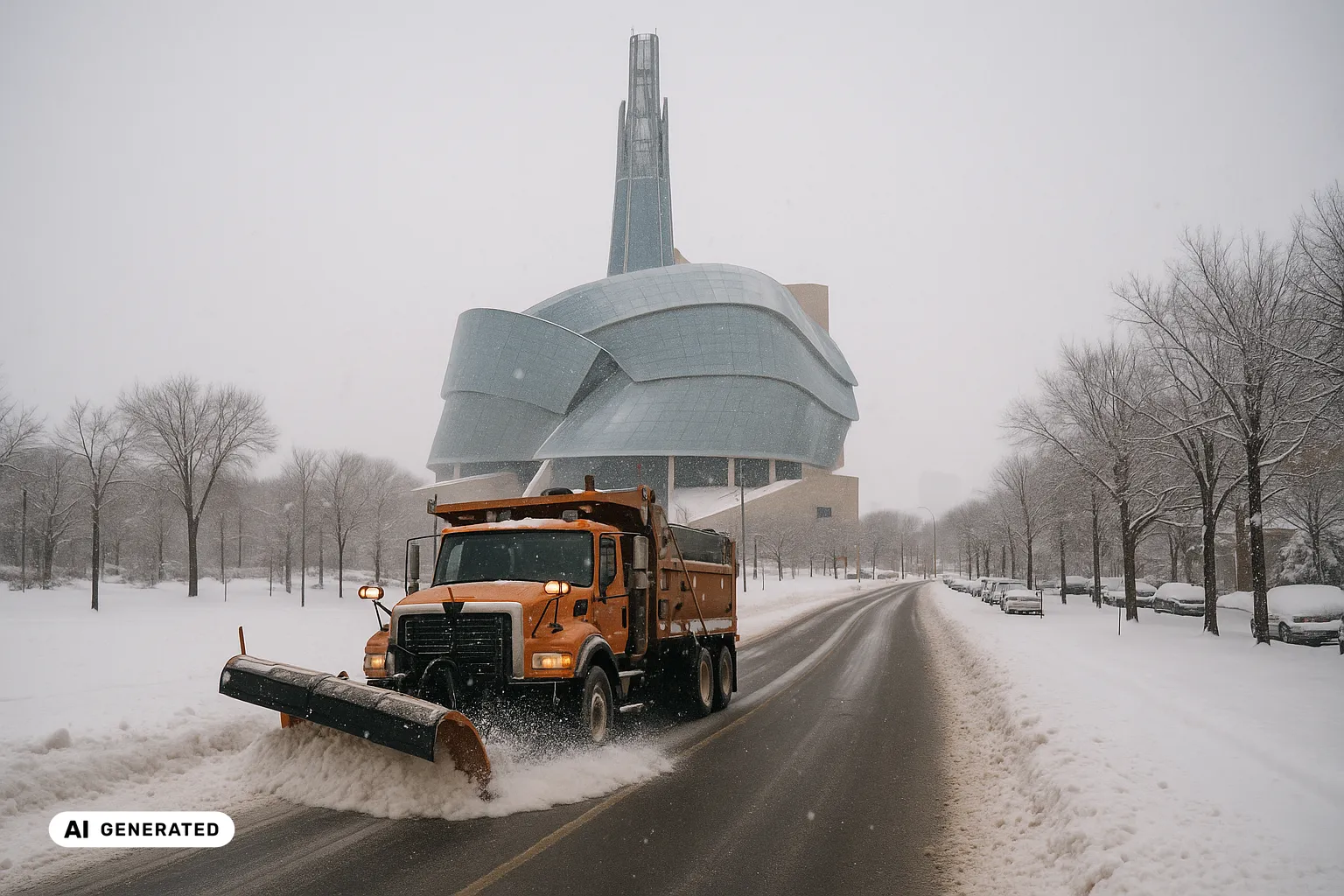
How Winnipeg sits, and what winter does here
Winnipeg stands on the flat Canadian prairie where the Red and Assiniboine rivers meet — a spot known as The Forks — with a third river, the Seine, threading through the city as well. There are no mountains and no large lakes nearby to soften the weather, and that openness defines its winter. An average year brings about 126 cm of snow, there is snow on the ground on roughly 132 days, and the daily low sits near −17 °C in December, −21 °C in January and −19 °C in February. The record low is −47.8 °C, and with the prairie wind behind it the wind chill has reached −57.1 °C — cold enough that Environment Canada has called Winnipeg the coldest city in the world with more than 600,000 people. The nickname Winterpeg is earned.
What makes the winter here distinctive is not a single dramatic event but its sheer persistence. Unlike Calgary, Winnipeg gets no chinook winds to thaw the snow mid-season; unlike a coastal city, it gets no maritime moderation either. The cold arrives and stays, often from November into April, so snow that falls tends to remain. The recurring problems are therefore less about melt-and-refreeze and more about deep cold, drifting snow blown across open ground, and the steady logistics of keeping a whole city moving for four or five months at a stretch — closer in character to the long, settled cold a few hours west in Edmonton than to Calgary’s wind-driven ice.
What the local rules say
Snow clearing in Winnipeg is split between the City and the property owner — but not the way it works in many cities. Here the City clears the public sidewalks too, on the same priority system it runs for streets (P1, P2, P3 and a P3 Enhanced tier around schools and active-living centres). What stays with the owner is the driveway, the private walks, and the approach that crosses the sidewalk to the curb. So the stretch of public sidewalk along the street is the City’s responsibility; the parts that cross your own property are yours.
One detail catches almost everyone out: the windrow, the ridge of snow a plow leaves behind as it passes. Clearing it is generally the owner’s job. The exception is a practical one — where a windrow more than 20 cm (8 inches) high is left across a front street driveway approach, the City normally takes it away during the same plowing pass. Windrows pushed across private walks during sidewalk plowing, by contrast, are not removed.
Streets are cleared by priority. Main roads (Priority 1) are plowed once snow passes about 3 cm and finished within 36 hours of a storm ending; transit and collector roads (Priority 2) start at 5 cm; residential streets (Priority 3) are plowed once snow reaches about 10 cm (back lanes at 5 cm), within five working days.
The part most likely to affect anyone parking on the street is the City’s two-layer parking-ban system. The Annual Winter Route Parking Ban is a standing overnight rule: once declared for the season — on or after 1 November, with seven days’ notice — parking is banned on signed Winter and Snow routes between 2 a.m. and 7 a.m. (from midnight in an extended ban). On top of that, after a heavy snowfall the City declares a Residential Parking Ban to clear neighbourhood streets. Every residential street belongs to an alphabetically named snow zone, and zones are cleared in 12-hour shifts. Parking against a Residential Ban can bring a $200 ticket ($150 if paid early), and breaking the extended snow-route ban $100 ($75 early); vehicles can be towed, and the City uses automated licence-plate readers, so a ticket can arrive in the mail.
These rules are the City of Winnipeg’s own policy and by-laws, and they change from time to time — the official pages linked below carry the current detail. None of this is legal advice.
On the ground: where it gets tricky
A few things shape winter service here in particular. The city’s three rivers and many bridges freeze before the streets around them, since cold air reaches a deck from above and below — predictable early ice points worth treating first. On the open prairie, drifting and blowing snow can be as much of a problem as fresh snowfall, redepositing across cleared surfaces hours after a pass. And the snow-zone choreography means the job is partly about timing: knowing which alphabetic zone a property sits in, and when its ban shift falls, decides whether a street is clear and legal to park on or about to be ticketed.
Because the season is long and the bans come in waves, keeping a clear record of when and where each route was cleared — and under what weather — is worth the habit. Over a four-month winter the passes add up, and a dated record is far easier to stand behind later than memory.
Around Winnipeg
Winnipeg’s snow-zone system stops at the city limits. The municipalities ringing it — East and West St. Paul, Headingley, Rosser, Springfield, Ritchot, Macdonald and St. Clements — are each their own jurisdiction, with their own clearing rules and timelines, and towns a little further out such as Selkirk and Steinbach run their own programs again. A property just outside Winnipeg will not automatically follow the City’s parking bans or its 20-cm windrow rule, so anyone working across the region is better off checking each municipality than assuming Winnipeg’s system travels with them.
Local facts
- Average annual snowfall about 126 cm at Winnipeg Richardson International Airport, per Environment and Climate Change Canada Climate Normals 1991–2020 (portals that report ~115 cm understate it).Source
- Snow lies on the ground on roughly 132 days in an average year, with measurable snowfall on about 54 days.Source
- Average daily lows of about −17 °C in December, −21 °C in January and −19 °C in February; the record low is −47.8 °C.Source
- Wind chill has reached −57.1 °C; Environment Canada has described Winnipeg as the coldest city in the world with a population over 600,000.Source
- According to the City of Winnipeg, the City clears public sidewalks on a priority basis (P1, P2, P3 and P3 Enhanced); property owners remain responsible for their own driveways, private walks, and the approach across the sidewalk to the curb.Source
- Windrows over 20 cm (8") high left at front street driveway approaches are normally removed during the same street-plowing pass; windrows pushed across private walks during sidewalk plowing are not removed.Source
- Street clearing runs by priority: main roads (P1) when snow exceeds about 3 cm, finished within 36 hours of a storm; transit and collector roads (P2) at 5 cm; residential streets (P3) at 10 cm, within five working days.Source
- Annual Winter Route Parking Ban: once declared, no parking on signed Winter/Snow routes between 2 a.m. and 7 a.m., starting on or after 1 November with seven days' notice.Source
- Residential Parking Bans are called by alphabetic snow zone and cleared in 12-hour shifts; fines are $200 ($150 if paid early) on residential streets and $100 ($75) on snow routes, with towing and licence-plate-reader enforcement.Source
Official contacts
City of Winnipeg — Snow Clearing and Ice Control
The City's winter program: street priorities, the windrow policy, sidewalk clearing and live updates.
City of Winnipeg — Winter Parking Bans
How the Annual Winter Route Ban and the Residential Parking Ban work, when each is in effect, and where you can and cannot park.
Find which alphabetic snow zone an address falls in and get ban alerts; call 311 to check on a towed vehicle or report a problem.
Common questions about winter service in Winnipeg
- Who clears the sidewalk and the driveway in Winnipeg?
- It is split — and not the way it works in many cities. The City of Winnipeg clears public sidewalks itself, on the same priority system it uses for streets, so the stretch of sidewalk along the street is the City's job. What stays with the owner is the driveway, the private walks, and the approach that crosses the sidewalk to the curb.
- What is the windrow at the end of my driveway, and does the City remove it?
- A windrow is the ridge of snow a plow leaves behind as it clears the street. Usually it is the owner's job to clear it. The exception: where a windrow over 20 cm (8 inches) high is left across a front street driveway approach, the City normally removes it during the same plowing pass. Windrows pushed across private walks during sidewalk plowing are not removed.
- What is the Annual Winter Route Parking Ban?
- It is a standing overnight ban on streets signed as Winter or Snow routes. Once the City declares it for the season — on or after 1 November, with seven days' notice — you cannot park on those routes between 2 a.m. and 7 a.m. so crews can clear them. In a large storm an extended ban can start at midnight instead.
- What is a Residential Parking Ban, and how do snow zones work?
- After a significant snowfall, the City declares a Residential Parking Ban to clear neighbourhood streets. Every residential street belongs to an alphabetically named snow zone, and zones are cleared in 12-hour shifts (7 to 7). You check your zone — the Know Your Zone app or 311 will tell you — and move your vehicle off the street during your zone's shift.
- What are the fines, and can my vehicle be towed?
- Parking against a Residential Parking Ban can bring a $200 ticket ($150 if paid early); breaking the extended snow-route ban is $100 ($75 early). Vehicles can be towed a short distance to a cleared street or to a tow compound, and the City uses automated licence-plate readers, so tickets can arrive by mail.
- How quickly are the streets cleared after a storm?
- By priority. Main roads (Priority 1) are plowed when snow passes about 3 cm and finished within 36 hours of the storm ending; transit and collector roads (Priority 2) start at 5 cm; residential streets (Priority 3) are plowed once snow reaches about 10 cm (back lanes at 5 cm), within five working days.
- Is the ice like Calgary's chinook problem?
- No — almost the opposite. Winnipeg has no chinook winds to thaw things mid-winter. The cold simply settles in for months, so snow stays as snow and the bigger hazards are sheer cold, drifting snow blown across the open prairie, and bridges over the rivers that freeze before the roads around them.
- Are the rules the same in the towns around Winnipeg?
- Not necessarily. East and West St. Paul, Headingley, Rosser, Springfield, Ritchot, Macdonald and St. Clements are separate municipalities ringing the city, each with its own clearing rules and timelines. A property outside the city limits will not automatically follow Winnipeg's snow-zone and parking-ban system.
Documenting winter service in Winnipeg
Anyone clearing snow and ice in Winnipeg may later need to show when and where a route was treated. Wintertrace is open-source software that records exactly that — time, location and weather for each run — as a calm basis for your own operational records and service proof. It is not a substitute for legal advice.
This overview is for general information and is not legal advice. Local rules on snow and ice clearing vary — the wording of the local rule and the responsible authority always govern.